Most Calgary homeowners don’t think about their siding until something goes wrong. But siding failure rarely announces itself dramatically — it progresses gradually, often becoming serious before it becomes obvious.
Here are the 7 warning signs that tell you it’s time to replace, not repair.
Sign 1: Widespread Cracking or Brittleness
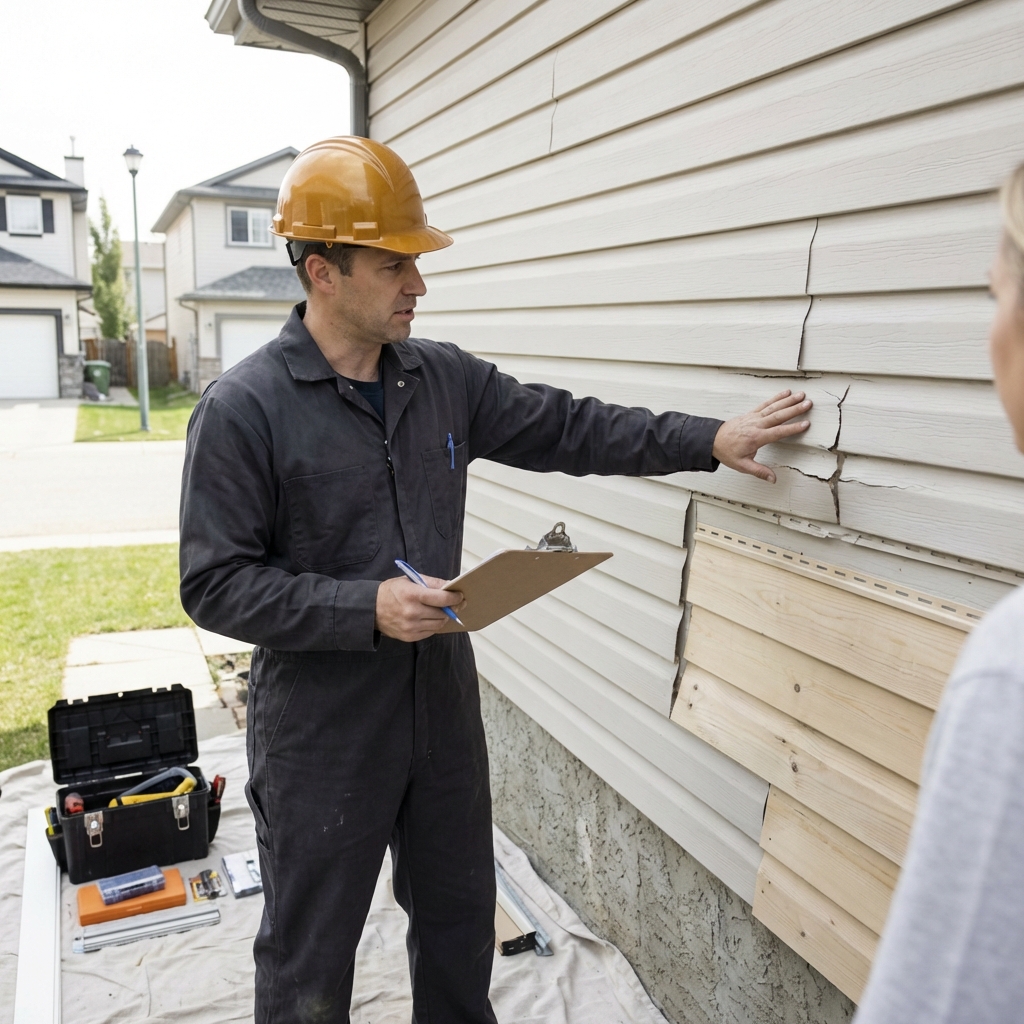
Individual cracked panels after a hailstorm are a repair situation. But if your vinyl siding shows cracking across multiple elevations — not from a specific storm, just from age — that’s a different problem.
Over time, UV exposure and thermal cycling in Calgary’s climate cause vinyl to lose its flexibility. The same impact that a younger panel would absorb produces a crack in old, brittle vinyl. When you see:
- Multiple cracked panels in areas that haven’t been specifically impacted
- Panels that crack when you apply gentle hand pressure
- Fine surface crazing (network of hairline cracks) across large areas
…the vinyl has reached end of material life. Patching individual panels is a short-term response to a systemic problem.
Sign 2: Fading That Won’t Clean Up
Significant color fading that persists after cleaning is a signal that the UV stabilizers in the vinyl have degraded. This matters for two reasons:
- Aesthetics: Severely faded siding looks worn and reduces curb appeal
- Material performance: UV degraded vinyl is also physically weaker — more prone to cracking and impact damage
A good-quality cleaning with vinyl siding cleaner should restore some vibrancy. If the siding looks essentially the same before and after a thorough cleaning, the color loss is structural, not superficial.
Sign 3: Multiple Failed Sections After Hail
One area of hail damage doesn’t necessarily mean replacement. But when a Calgary hailstorm damages siding in multiple locations across your home — and especially if some sections show heavier damage than others, suggesting varied vulnerability — that pattern suggests the siding has uneven integrity.
Older siding that has become brittle from UV will fail at lower impact thresholds than it did when new. When a hailstorm creates widespread damage across a home’s exterior, it often makes more economic sense to replace completely than to patch the worst areas and wait for the next storm to damage more.
Sign 4: Soft or Spongy Sheathing
This is the most serious sign on this list. Press firmly on the wall surface at the bottom courses of siding and around window and door frames. If the wall feels soft, spongy, or gives under pressure, you have moisture-damaged sheathing under the siding.
This is not a siding problem per se — it’s a wall assembly problem. But it signals that:
- Water has been getting behind the siding for long enough to damage the structure
- The siding’s moisture barrier function has been failing
- The scope of the project now includes sheathing repair alongside siding replacement
Soft sheathing found during an inspection always means the siding comes off — the only question is how much structural repair is also needed.
Sign 5: Interior Moisture Issues on Exterior Walls
If interior walls on the exterior of your home show:
- Paint bubbling or peeling
- Drywall staining or softness
- Mold or mildew odors in rooms adjacent to exterior walls
- Condensation on interior walls that doesn’t correspond to a plumbing issue
…moisture is getting through your wall assembly. The source could be windows, doors, or siding — a professional inspection will identify the pathway. But in an older home with aging siding, failing siding is often a contributing factor.
Sign 6: Visible Mold or Staining on Siding Surface
Some surface mildew on siding is normal in sheltered areas and cleans off easily. But if you see:
- Dark staining that returns quickly after cleaning
- Mold growing behind the siding and visible at the lower edge
- Green algae or mold in the grooves between panels that’s spreading
…the siding has a chronic moisture issue. This can be a drainage problem (splash-back, poor grading) or a sign that moisture is getting trapped behind the panels — from failing flashing, inadequate drainage gaps, or compromised house wrap.
Sign 7: Age Over 25 Years With Multiple Minor Issues
This is the cumulative assessment. Siding that is 25+ years old showing multiple of the above signs — even if no single issue is catastrophic — has reached end of life. The calculation is straightforward:
- How many more years of useful life does this siding realistically have?
- What will ongoing repairs cost over that period?
- What is the benefit of new siding vs. continued patching?
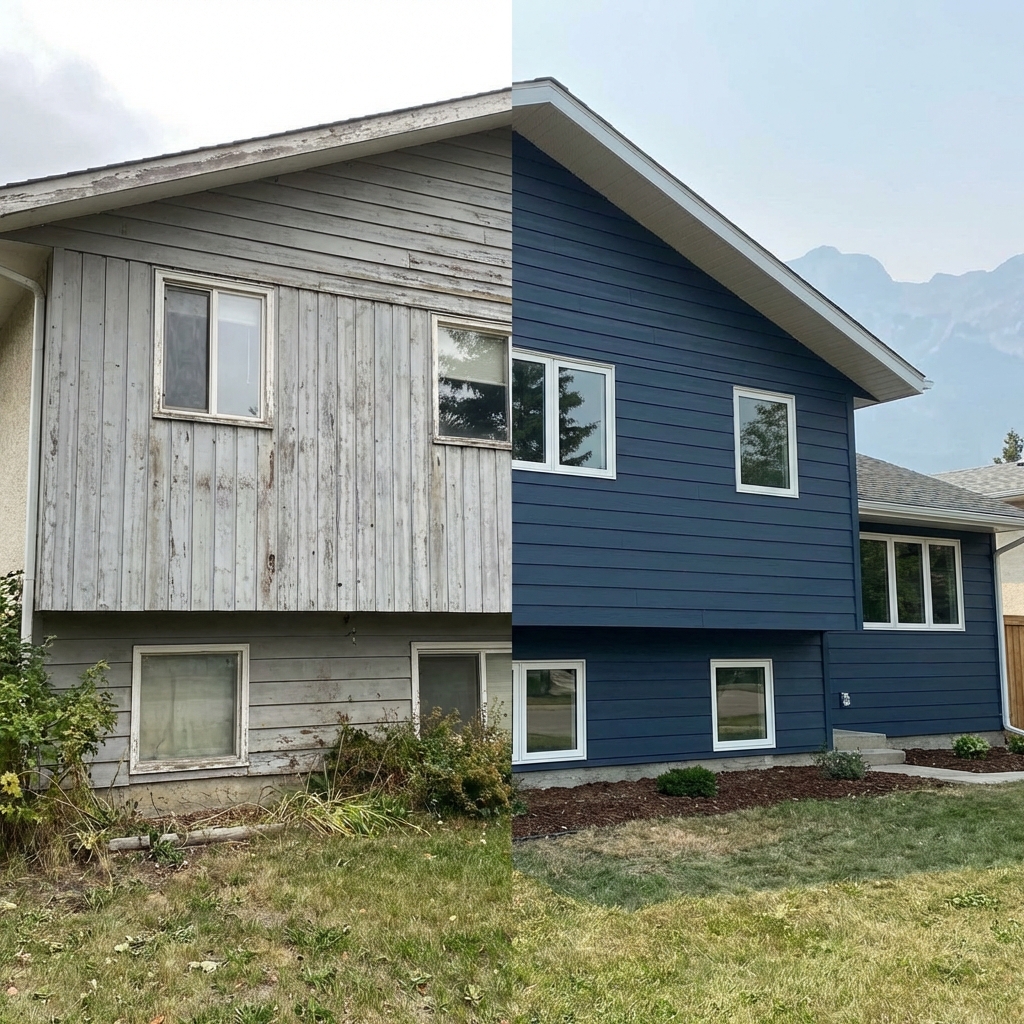
For most Calgary homes with pre-2000 siding that’s showing multiple symptoms, replacement on a planned timeline (before it becomes an emergency) delivers better value than reactive patching.
What to Do If You See These Signs
If you recognize three or more of these signs on your Calgary home, it’s worth getting a professional assessment before the next hail season or winter. Replacing siding on your timeline, with proper contractor selection, is far better than replacing it under emergency pressure after a major storm.
King’s Land Siding provides free siding assessments throughout Calgary. We’ll give you an honest evaluation — repair vs. replace, material recommendations, and a detailed written estimate. Call (403) 555-0190 or book your assessment online.