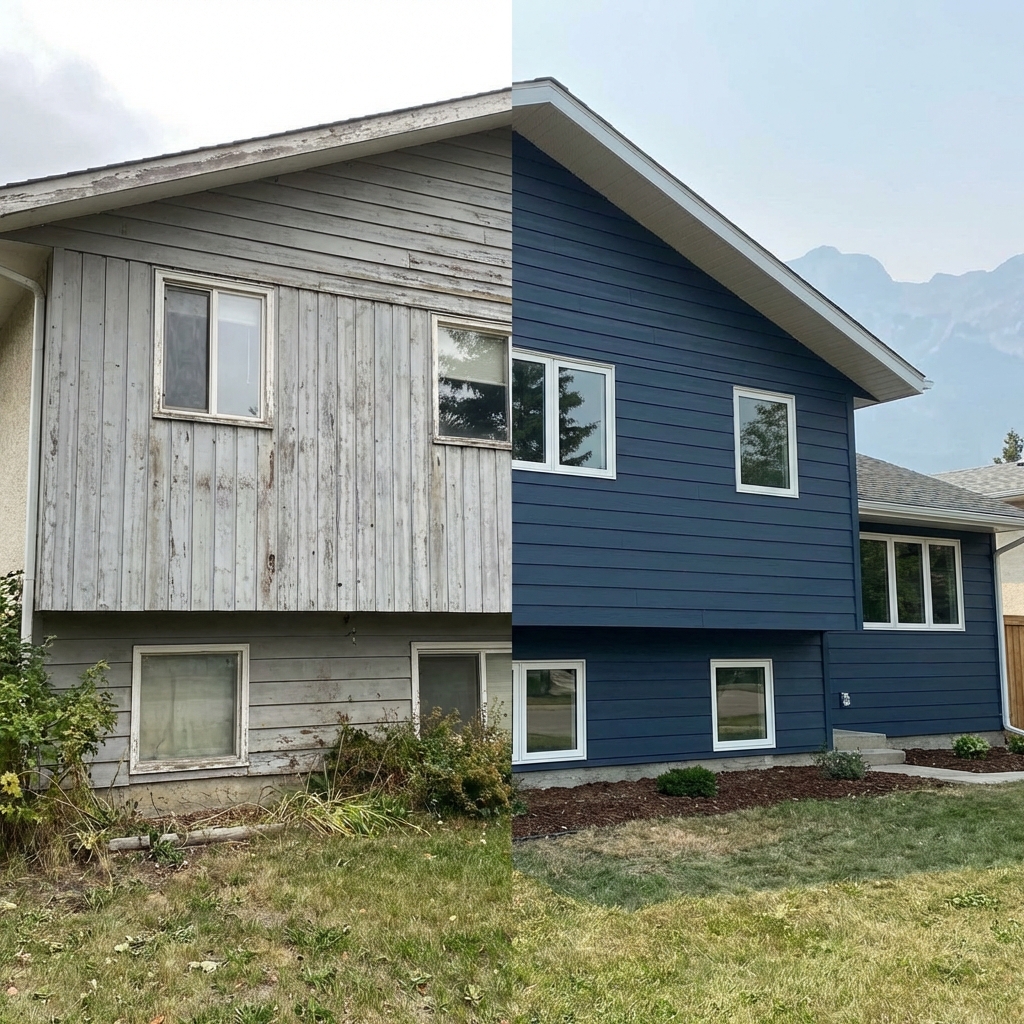
After every Calgary hailstorm, thousands of homeowners face the same question: fix what’s damaged or replace everything? It’s also a question that comes up when siding is aging and showing wear without a specific storm event.
The right answer isn’t always obvious — and it’s one that contractors with different business interests can influence in different directions. Here’s how to think through it objectively.
The Core Decision Framework
Ask yourself these five questions:
- How much of the surface is damaged or failing?
- Can the existing material be matched for a seamless repair?
- What is the age and overall condition of the existing siding?
- Is there any evidence of moisture damage under the siding?
- What is the cost difference between repair and replacement for your specific home?
The answers determine which path makes more sense.
When Repair Makes Sense
Repair is the right call when:
Damage is truly localized
If one wall elevation took a direct hit in a storm but the other three walls are in excellent condition, targeted repair of the damaged elevation is entirely reasonable. The key is being able to match the material.
Material matching is possible
For homes with siding installed in the last 5–8 years using a product still in production, color and panel matching is usually achievable. The repair will blend well if done by an experienced installer.
The underlying sheathing is dry and sound
If the area under the damaged panels is dry, structurally sound, and the house wrap is intact, repair is straightforward and cost-effective.
Age is under 15 years
Siding under 15 years old with good installation and limited damage is worth repairing. You’re preserving a product that has 15–25+ years of useful life remaining.
Typical repair scenarios:
- 3–10 cracked panels from a moderate hail event
- Mechanical damage from ladder or impact (isolated)
- 1–2 panels near grade that have moisture damage while the rest is fine
- Trim or corner cap replacements
When Full Replacement Makes Sense
Replacement is the better long-term decision when:
Damage is widespread
If 25–35%+ of your siding surface is cracked, dented, or failing, partial repairs become a patchwork solution. You’re spending significant money and still left with aging material that will continue to deteriorate.
Material cannot be matched
Siding over 10–15 years old from a discontinued product or color run often cannot be matched acceptably. A visible mismatch of new panels against weathered old panels looks worse than a full replacement — and signals to buyers during resale that the home received incomplete repairs.
There’s evidence of moisture under the siding
If inspection reveals soft sheathing, mold, or moisture damage in any area, that’s a signal that the wall assembly has been compromised. In Calgary, moisture under siding can spread through freeze-thaw action. Full removal allows inspection of the entire wall — you can’t find problems you can’t see.
The siding is over 20–25 years old
Even without specific damage, siding in the 20–25+ year range in Calgary is approaching end of life. UV degradation, thermal cycling fatigue, and brittling are real — and hail damage on already-stressed material is a prompt to replace rather than patch.
The insurance claim covers it
After a major hail event, if your insurance company is covering significant damage, it often makes sense to replace the entire affected elevation rather than just the most damaged panels. This gives you consistent, warranted material and avoids future matching issues.
The Matching Problem: A Calgary-Specific Issue
One underappreciated factor in the repair vs. replacement decision is how dramatically UV fading affects siding in Calgary over time. At 1,045 metres elevation, UV exposure is intense — and even quality siding with UV-stabilized pigments shows measurable color shift over 10+ years.
When you repair a section, the new panels are your original color. The surrounding existing siding has faded. The mismatch can be visible from the street, especially in medium and dark tones.
If matching is your goal, repair works best when:
- The damaged area is small (a few panels)
- The damage is on a less-visible elevation (side or back of the house)
- Or the replacement is done as an entire elevation rather than scattered panels
Cost Comparison: Running the Numbers
| Scenario | Repair Cost | Full Replacement Cost |
|---|---|---|
| 5 panels damaged, matchable material | $600–$1,200 | $12,000–$20,000 |
| 20% of one elevation damaged | $2,000–$4,500 | $12,000–$20,000 |
| 35–40% of exterior damaged | $5,000–$9,000 | $12,000–$20,000 |
| Full-home hail damage + moisture found | Not recommended | $14,000–$25,000 |
At the 35–40% damage level, repair and replacement costs start to converge — especially when you factor in the age of the existing material and the likelihood of continued decline.
Getting an Honest Assessment in Calgary
The challenge with this decision is that contractors have financial incentives in both directions — some prefer replacement jobs (higher value), others are happy to do a quick repair and move on. Get assessments from two contractors, ask them to explain their recommendation in writing, and consider the full picture.
At King’s Land Siding, we give every homeowner an honest repair vs. replacement analysis before any quote. Call (403) 555-0190 or start your free estimate online.